
Reusable Packaging Targets: New EU Requirements for Transport Packaging Starting in 2030
Reuse targets: assess packaging formats and supply relationships
Article 29 of Regulation (EU) 2025/40 sets different reuse targets. They do not apply indiscriminately to every transport package or delivery route. The packaging format, its use within the Union, the companies involved and applicable exemptions must be assessed.
Requirements from 2030
From 1 January 2030, Article 29(1) generally requires at least 40% reusable packaging within a reuse system for the transport packaging and sales packaging used for transport in the formats listed there. Examples include pallets, foldable plastic boxes, trays and certain intermediate bulk containers. This is not a blanket quota for all imports, exports or shipping packaging.
Paragraphs 2 and 3 establish additional reuse requirements for certain transport operations between company sites or linked or partner enterprises, and for deliveries to other economic operators within the same Member State. The covered formats and exemptions also matter here. These provisions do not mean that every domestic packaging flow must be converted entirely to reuse.
Distinguish exemptions and separate targets
Article 29(4) exempts, among other cases, packaging used for specified dangerous goods transport and cardboard boxes from the obligations in paragraphs 1 to 3. Further exemptions concern particular uses and business circumstances. In 2026, the Commission adopted an exemption for pallet wrapping and straps from the 100% requirements; the general 40% target must be considered separately.
For certain grouped packaging in box form, paragraph 5 sets a separate 10% requirement from 2030. The 70% and 25% figures for 2040 are formulated as targets that the relevant economic operators must endeavour to achieve. They should not be presented as equivalent to the binding minimum quotas for 2030.
Plan the actual reuse system
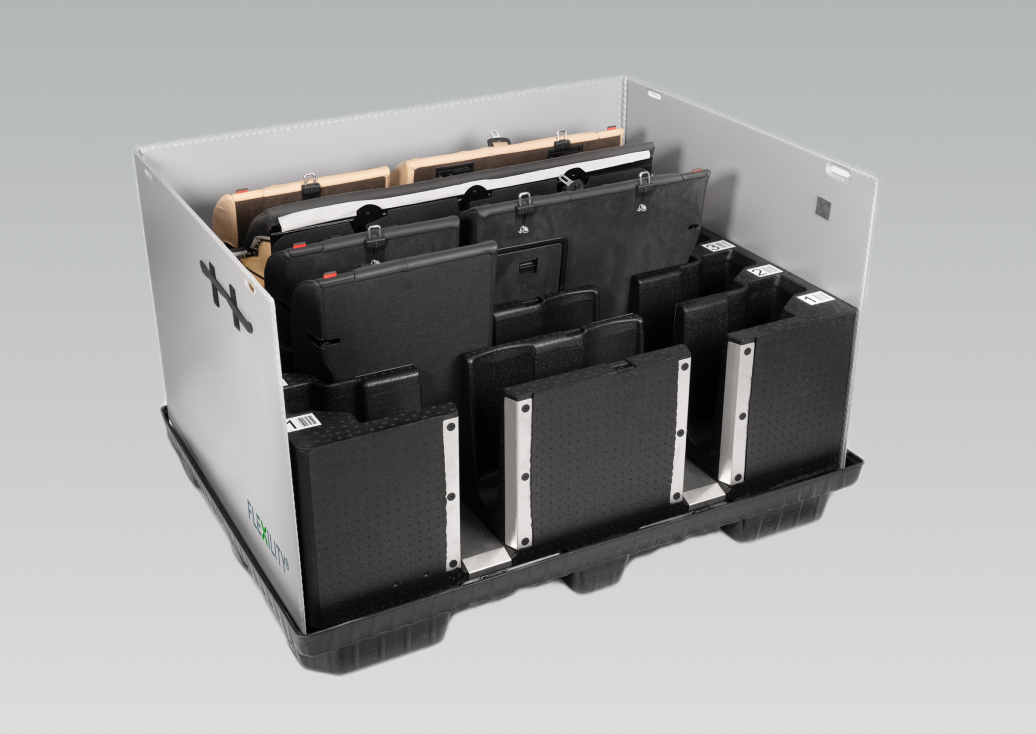
A planned reuse system needs arrangements for returns, inventory management, inspection, cleaning, repair and replacement. Containers and component supports must suit the goods and transport process. Any change in costs, waste quantities or environmental impacts must be assessed using actual rotations, service life and a defined comparison system; no general saving is promised here.
Sources: Regulation (EU) 2025/40, Article 29, and the European Commission information on the exemption for pallet wrapping and straps. Each project requires assessment against the applicable rules, including supplementary legal acts.
Editorially updated in September 2026. The previous generalised account of quotas and environmental advantages has been revised.